
Edition note: ISO lists the 2018 editions of Parts 1 and 2 and the 2020 edition of Part 3 as current published standards, while revisions are in progress. Check the ISO catalogue and your national adoption before putting an edition into a contract.
What the main parts do
| Part | Practical focus | Typical user question |
|---|---|---|
| ISO 19650-1 | Concepts and principles across the asset life cycle | What information-management system are we trying to create? |
| ISO 19650-2 | Information management during project delivery | How will requirements, appointments, mobilization, production and exchanges work? |
| ISO 19650-3 | Information management during asset operation | How will operational information be requested, updated and used? |
| ISO 19650-4 | Information exchange | How should an exchange be planned and assessed? |
| ISO 19650-5 | Security-minded information management | What information creates security risk, and how should access be controlled? |
| ISO 19650-6 | Health and safety information | How should structured information support safer assets and work? |
Buying one part does not automatically implement the system. Appointments, information requirements, capability, CDE workflows, delivery plans, quality checks and human decisions must align.
Roles are appointment relationships
The appointing party defines what information it needs and assesses delivery. A lead appointed party coordinates information delivery across its delivery team. Appointed parties and task teams produce information within their appointments. Organizations can hold different roles on different appointments.
A practical responsibility matrix should identify who is responsible, accountable, consulted and informed for each activity—especially requirements, BEP maintenance, MIDP/TIDP preparation, information exchange, acceptance, asset-data validation and security.
Start with decisions, then information
Good information requirements begin with a purpose: a decision, approval, operational task or business outcome. They then define what information is needed, when, in what form, to what acceptance criteria and by whom.
| Layer | Plain-language purpose |
|---|---|
| OIR | Information needed to support organizational objectives. |
| AIR | Information needed to operate and manage an asset. |
| PIR | Information needed to make project-level decisions. |
| Exchange information requirements | The information an appointing party requires at a particular exchange or appointment. |
Use project-defined terminology and current national guidance. The durable rule is to maintain traceability from the outcome to the accepted information.
A practical delivery-phase sequence
- Assess the need and define project information requirements.
- Define the information standard, production methods, reference information and shared resources.
- Invite the delivery team to tender with clear information requirements.
- Evaluate capability, capacity and the prospective team’s pre-appointment BEP.
- Agree appointments, responsibility matrices and delivery plans.
- Mobilize: test the CDE, coordinates, templates, exchanges and issue workflow.
- Produce information collaboratively in task teams, then review and authorize it for sharing.
- Exchange information against the stated purpose and acceptance criteria.
- Close out, archive and transfer accepted project/asset information.
A CDE is a workflow plus suitable technology
A common data environment is not merely a cloud folder. It needs controlled states, metadata, revision/version rules, permissions, review/authorization, status or suitability rules, retention and a clear authoritative record. A project may use multiple technical systems while maintaining one agreed workflow.
Do not assume: “WIP, Shared, Published and Archived” means every platform button carries those exact names. Map the required workflow to the chosen technology and appointment.
What a useful BEP should settle
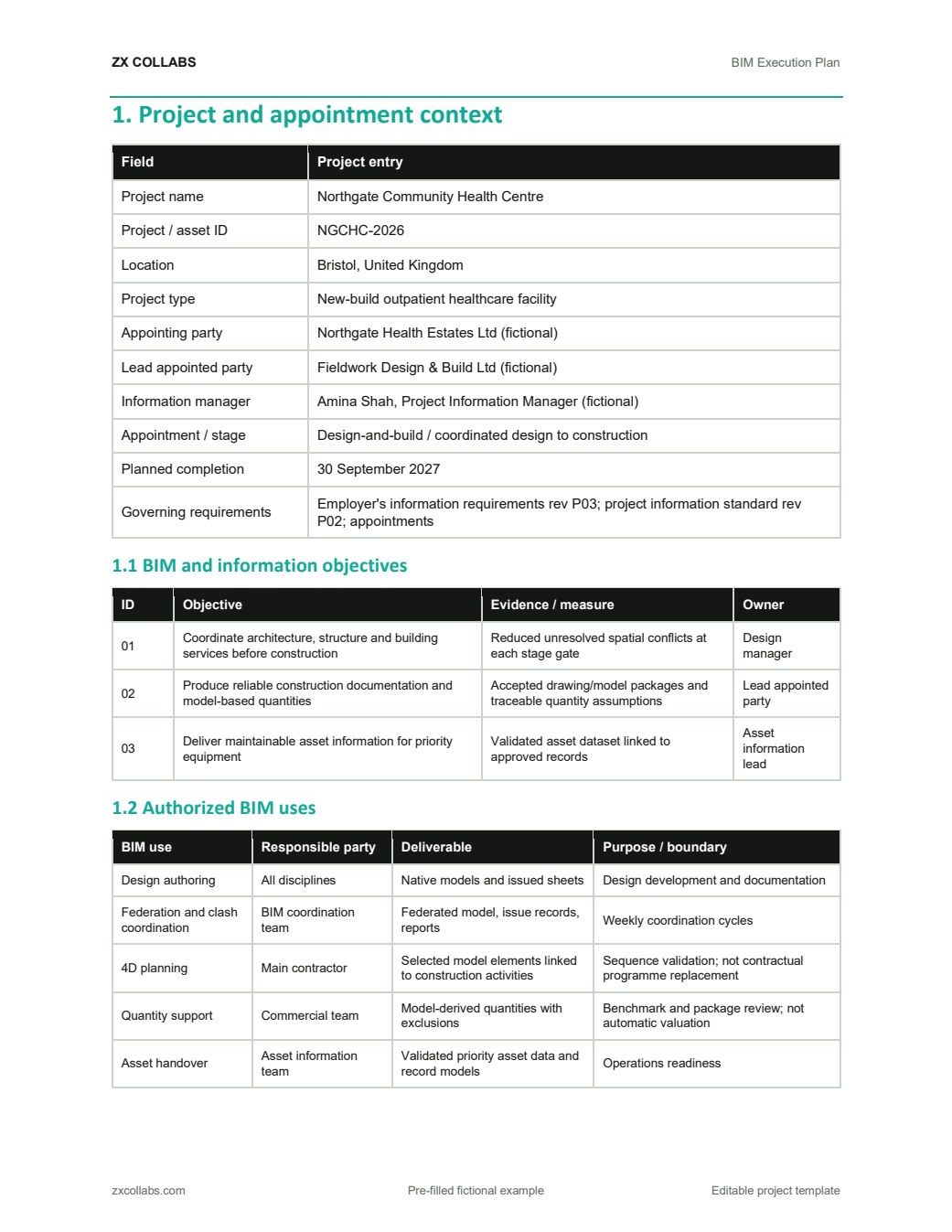
- Project context, appointments, objectives and authorized BIM uses
- Named roles, information responsibilities and escalation
- Requirements, acceptance criteria and level of information need
- Master and task information delivery planning
- CDE, container identification, classification and exchange rules
- Coordinates, model breakdown, federation and software/version strategy
- Coordination, issue, QA, security and mobilization tests
- Handover, archive, acceptance, revision and sign-off
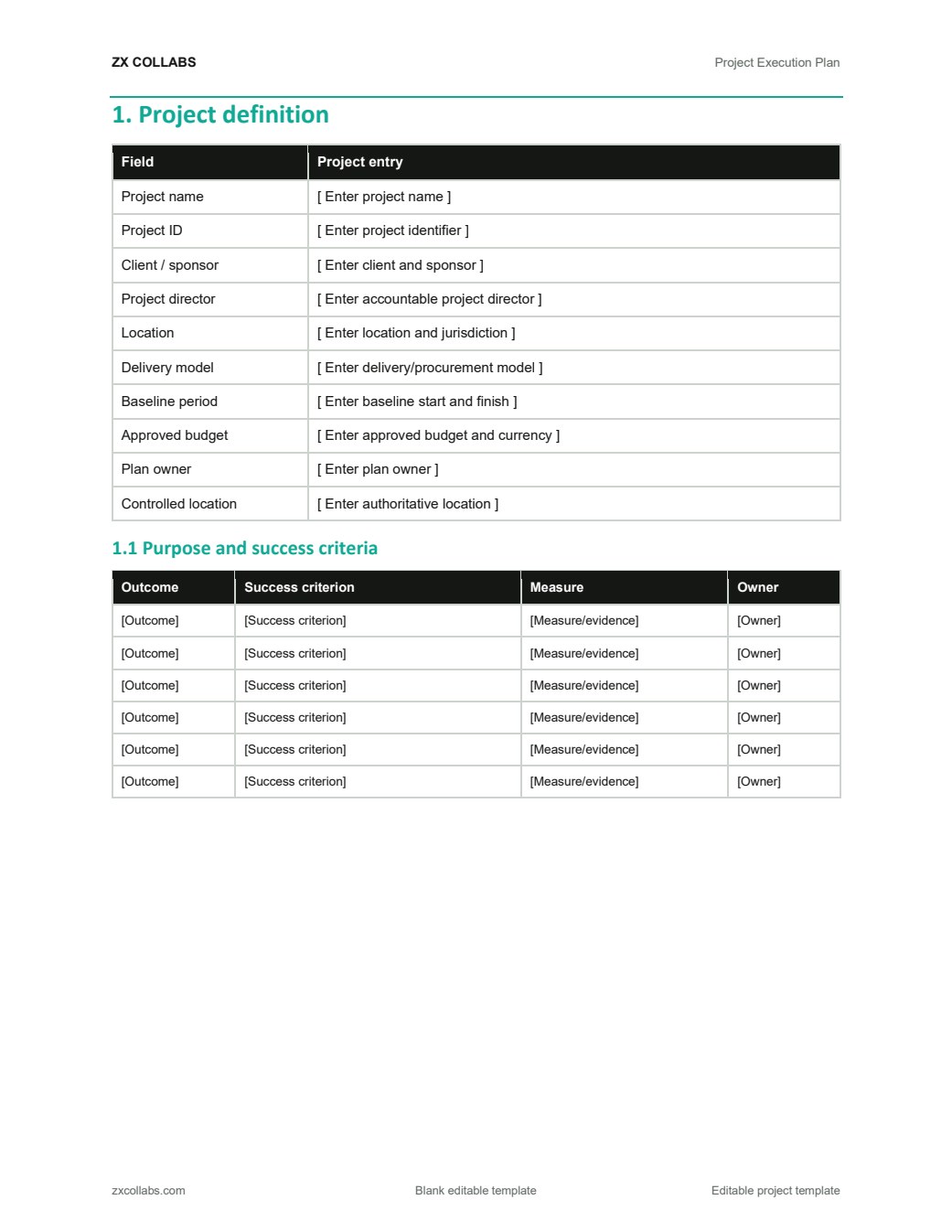
Download blank and pre-filled BEP templates ↗
Seven common implementation mistakes
- Copying a filename convention without adopting the project’s full information standard.
- Writing “LOD 400” without purpose, element scope, required data and approval responsibility.
- Using a BEP as marketing text rather than an agreed operational plan.
- Creating a MIDP without task-team ownership and realistic production dependencies.
- Treating model upload as information acceptance.
- Choosing software before defining information exchange and validation needs.
- Claiming ISO compliance or certification without a controlled, evidenced basis.
Official sources and boundaries
- ISO 19650-1:2018 catalogue page ↗
- ISO 19650-2:2018 catalogue page ↗
- ISO 19650-3:2020 catalogue page ↗
- UK BIM Framework implementation guidance ↗
- ISO 7817-1:2024 level of information need ↗
This explainer uses original language and does not reproduce the standards. The ISO publications, applicable national annex/guidance and project appointments remain authoritative.